
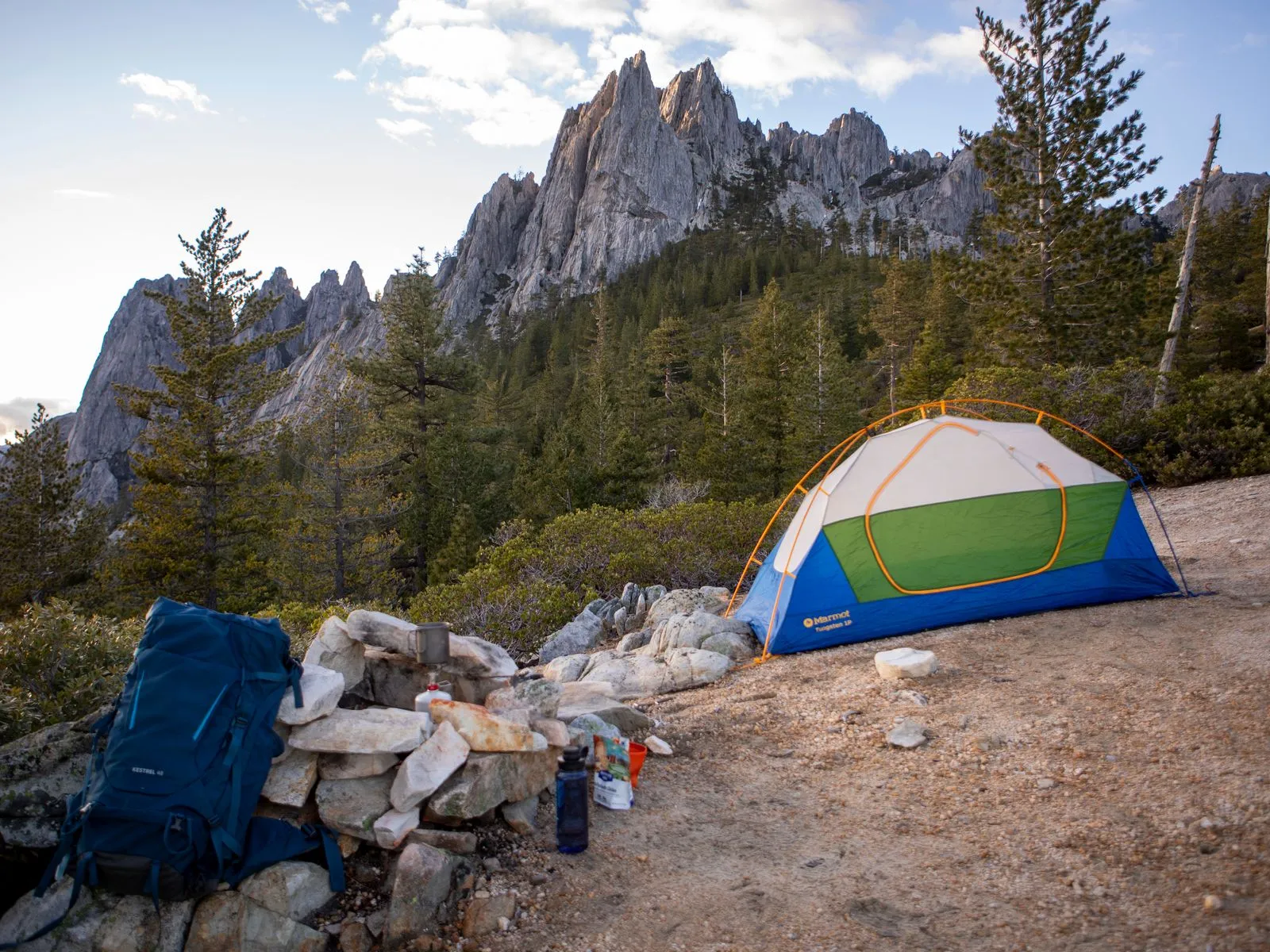
A well-planned packing list can make tent camping more comfortable without filling every inch of your car. Start with the essentials you need to sleep safely, prepare food, and manage the weather. Then add a few personal comfort items based on the forecast, your campsite, and the length of your stay. Before you leave, check campground rules and confirm what facilities are available so you can pack what you need—and leave unnecessary gear at home.
Set Up for a Restful Night
Bring a tent with all of its poles, stakes, and rainfly, plus a ground cloth or footprint sized to fit beneath it. Check the tent at home before your trip so you can spot missing parts and practice setting it up. A sleeping bag rated for the expected overnight temperatures and an insulated sleeping pad help protect you from cold ground and improve comfort.
Pack a pillow or a compact camp pillow, a headlamp for each camper, and spare batteries or a charged power bank. Keep a small light within reach after dark. Store sleep clothes and other items you want to keep dry in a sealed bag, and place footwear where you can find it without searching outside the tent.
Keep Cooking Simple
Plan meals before packing cookware. A camp stove, fuel approved for that stove, lighter or matches in a waterproof container, and a pot or pan cover basic cooking needs. Bring a mug, plate, bowl, and eating utensils for each person, along with a can opener if your menu calls for one. Check campground rules before bringing a stove or preparing food at your site.
Pack drinking water or a way to refill it, plus a water container for cooking and cleanup. Use a cooler for foods that need to stay cold, and store food securely according to campground guidance to discourage wildlife. Add dish soap, a sponge, a small towel, trash bags, and a container for food scraps. Simple meals reduce both cleanup and the amount of gear you need.
Dress for Changing Conditions
Check the forecast for the full trip, including nighttime temperatures and the chance of rain. Pack layers you can add or remove: a moisture-wicking base layer, a warm midlayer, and a rain jacket with a hood. Bring extra socks and a dry outfit in a waterproof bag. Even when the day looks mild, cooler evenings can make a warm hat or an extra layer useful.
Choose sturdy, comfortable footwear suited to the campsite and any planned walks. Pack a brimmed hat, sunglasses, and sunscreen for sunny conditions, along with insect repellent when appropriate. A compact umbrella can help during short walks, but it does not replace rain protection for your body or a properly secured tent. Avoid cotton as your only warm layer because it can stay damp and feel cold.
Cover Safety and Small Comforts
A basic first-aid kit should include supplies for minor cuts, blisters, and personal medical needs. Bring any required medications, a charged phone, a map or directions, and a backup light. A multi-tool, duct tape, and a few spare tent stakes can help with small repairs. Keep essential items together where they are easy to reach, and tell someone your plans if you will be away from the campsite.
Consider a camp chair, a small towel, hand sanitizer, toiletries, and a reusable water bottle. Pack only the comfort items you will use, and protect them from rain and damp ground. Before departure, review the campground’s rules for fires, food storage, quiet hours, and facilities. For a tent-only stay at Cedar Sky Campground in Tulsa, confirm site details and permitted equipment before packing.
A useful packing list balances shelter, sleep, food, weather protection, and safety with the space you have. Check your gear, review the forecast, and confirm campground rules before leaving. Pack essentials first, then add only the comfort items that suit your plans. For questions about a tent-only stay, contact Cedar Sky Campground before your visit.